We believe something simple:
Fairness shouldn’t depend on how hard someone is trying to manage it. It should be built into the system.
That belief shapes everything about how Cadence works.
And a question I couldn't stop thinking about.
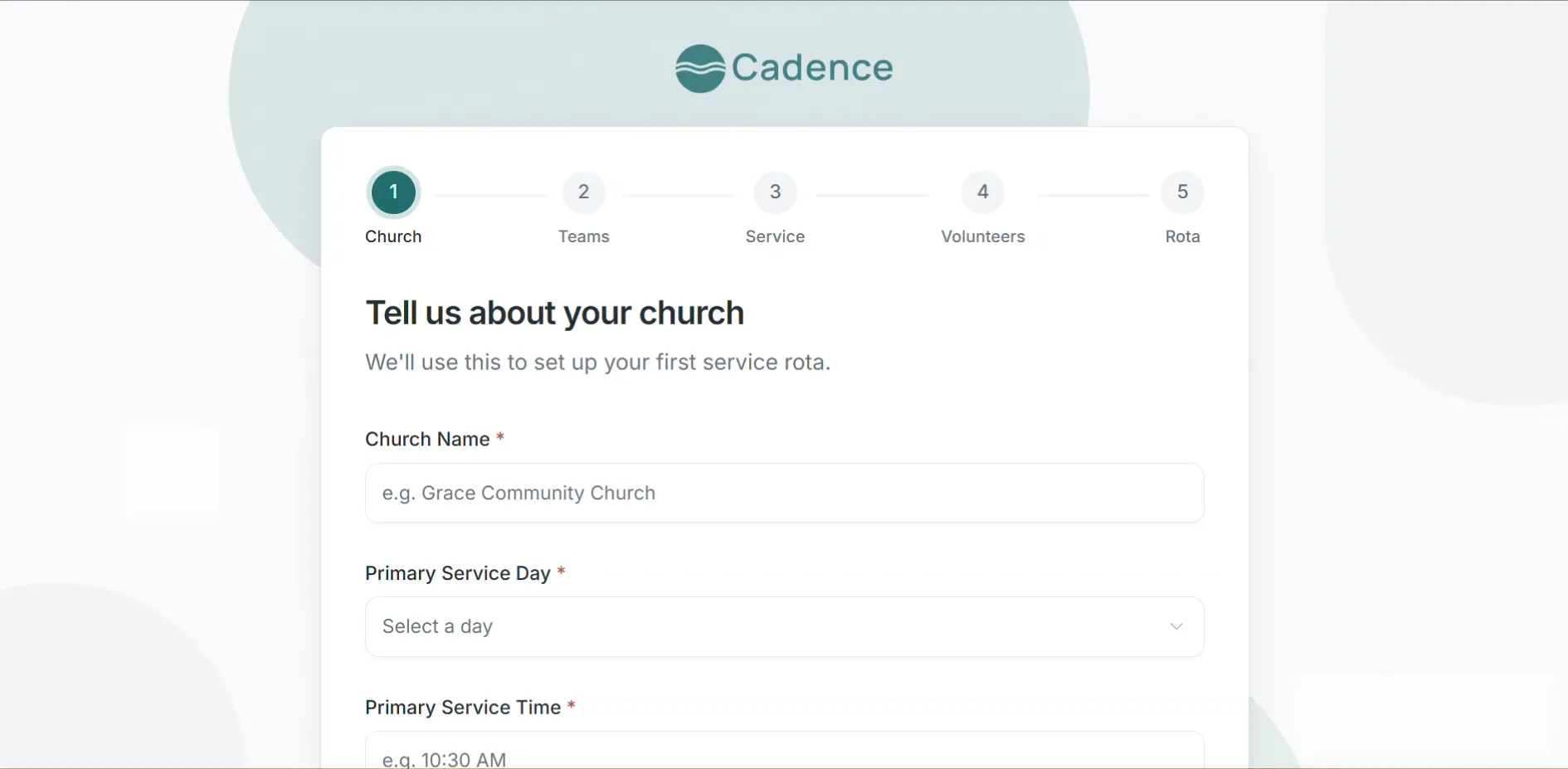
I'm Nadya.
I'm not a pastor or a church leader.
I'm a regular churchgoer; I've been in the worship team for years, lead worship some weeks, and used to run youth work at my old church.
In my working life, I'm an IT training consultant.
I train people to use systems. I know when something is harder than it needs to be.
A while back, I asked a question in a church meeting.
A simple one, or so I thought:
"Could we plan the rotas a few months ahead?"
The answer, was yes which was great. The next round of rotas were being worked on over the last couple of weeks and were coming out soon, but what she went to to share next showed it was a long-winded and complicated process, the type that if possible to avoid or put off as long as possible, that was preferable.
Not only what she shared but the way she shared it stayed with me.
And I remember thinking:
it shouldn't be this hard.

A few more weeks passed.
There was a small update to the rotas.
But I kept thinking about the problem.
I thought about it from a few different angles.
What would I need if I were the only person scheduling rotas for the whole church?
What would I need if I were leading just one team?
And what would I need as a volunteer; someone just wanting to know when I'm serving?
Then I thought about what happens when the team is small.
When a handful of people cover several roles.
When there's no natural moment to step back, sit in a service, and just receive.
Church scheduling isn't just a logistics problem.
It's a people problem.
And most of the tools I found were solving the wrong part of it.

Not to replace the system your church already uses.
Not to add another layer of complexity.
But to make rota planning genuinely simpler and to build the things that protect your team directly into the way it works.
Rest. Protected automatically.
Fairness. Built in from the start.
Fragile teams. Visible before they break.
Every decision the system makes, you can see why.
And you can always change it.
It's not about taking control away from the people planning rotas.
It's about giving them time back and making sure the rota works for everyone in it.

We believe something simple:
That belief shapes everything about how Cadence works.
Most rota tools help you fill slots.
Cadence helps you protect the people in them.
The difference isn't just features.
It's what the system treats as important.
When Cadence builds a rota, it doesn't just ask: who's available?
It asks: who has had a rest recently? Who's been carrying more than their share?
Who would be serving back-to-back if we chose them again?
And it tells you why it made every choice., so you're always in control,
and nothing is hidden.
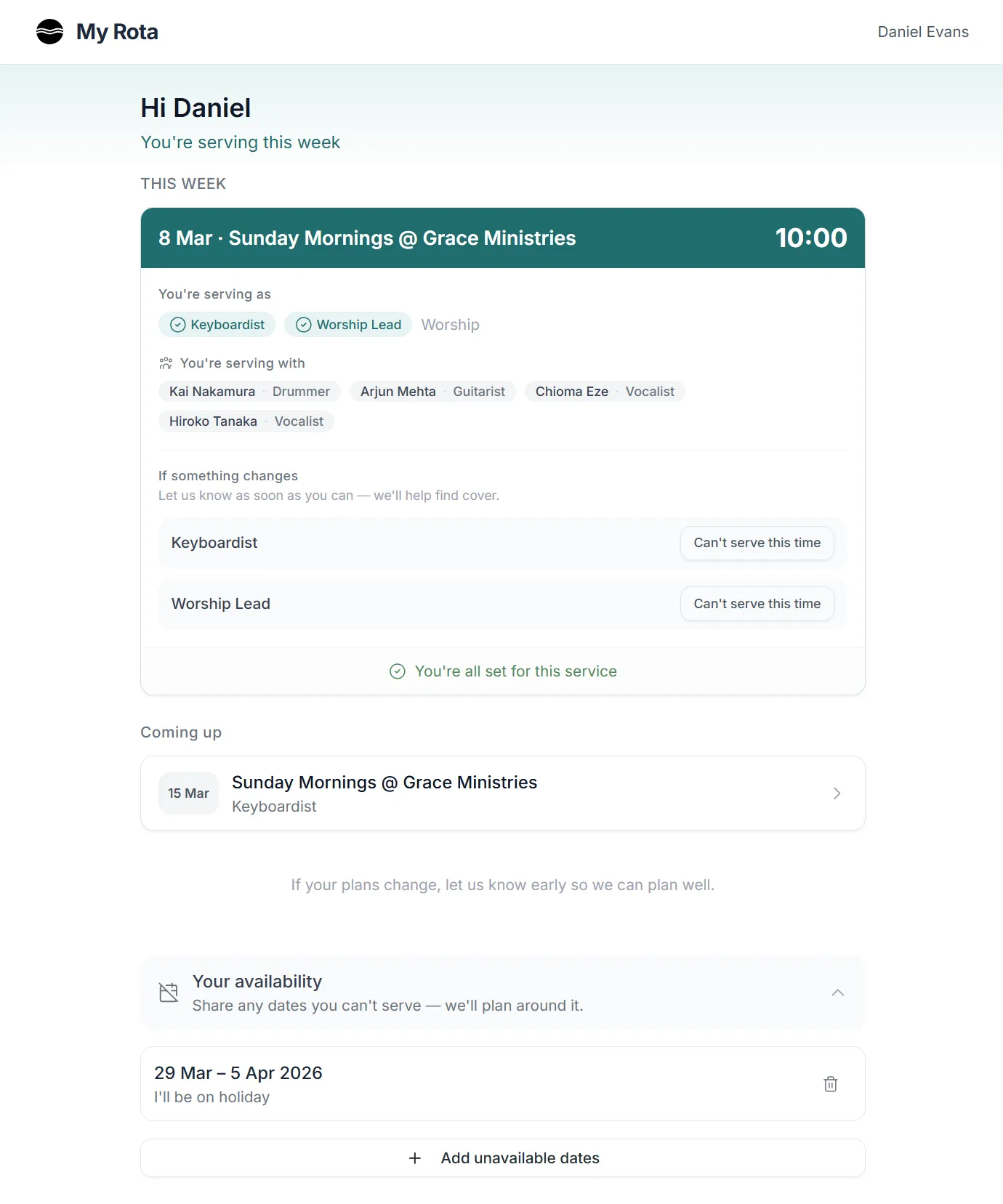
Cadence is for churches of any size and denomination —
where rota planning has quietly become harder than it should be.
Often a leader or coordinator ends up holding everything together behind the scenes, with little visibility or shared support.
The same faithful people are relied on again and again, with limited opportunity to rest, step back, or receive.
What should take minutes often takes longer than expected, with time spent chasing availability and managing last-minute changes.
If any of that sounds familiar, Cadence was built with your church in mind.
Working closely. Building carefully.
Making sure it genuinely helps before we grow.
If you're managing rotas and something here resonates,
I'd love to hear from you.
Nadya
If Cadence sounds like what your church needs, fill in your details and I'll be in touch personally.